
Resume vs CV vs Biodata: Key Differences Explained for Freshers
“Send me your CV.”
“Upload your resume.”
“Attach your biodata.”
If these three sentences have ever confused you, trust me — you’re not alone.Every year, thousands of students, freshers, and job seekers in India search on Google:
Resume vs CV vs Biodata?
Difference between CV and Resume?
What is Biodata for jobs?
Resume or CV for freshers?
And honestly, the internet makes it even more confusing.
Most people use Resume, CV, and Biodata like they mean the same thing. But they don’t. And choosing the wrong one can actually affect your job application.
By the end of this blog, you’ll never confuse Resume vs CV vs Biodata again.
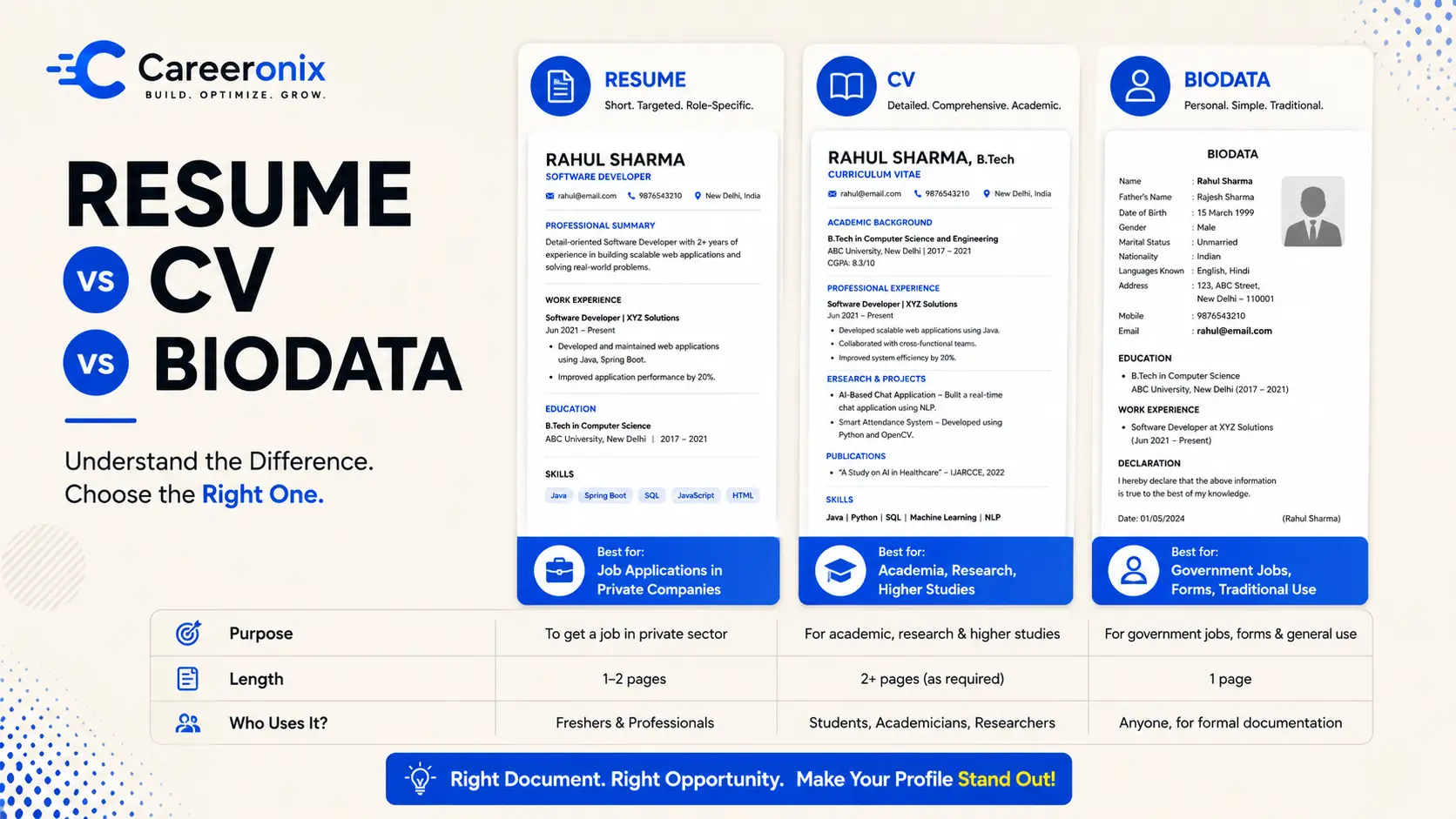
What Is the Main Difference Between Resume, CV, and Biodata?
Think of them like three different versions of introducing yourself.
Resume = Short movie trailer
CV = Full documentary
Biodata = Personal information form
That’s it.
But let’s understand properly.
Now let’s break each one down in the easiest way possible.
What Is a Resume?
A resume is a short document that shows:
Your skills
Education
Projects
Internship experience
Achievements
It is designed to help recruiters quickly understand:“Can this person do the job?
(Modern resumes should also be optimized for Applicant Tracking Systems (ATS), but many freshers make the mistake of overusing keywords unnaturally. Learn how to balance ATS optimization with readability in our guide on Keyword Optimization vs. Keyword Stuffing.)
When Should You Use a Resume?
Use a resume when applying for:
Private jobs
Internships
Startup companies
Campus placements
Freelance opportunities
Most corporate roles
Many freshers create resumes like school essays.
They add:
Father’s name
Religion
Full address
Blood group
10 hobbies
Long paragraphs
Recruiters do not care about most of these things.
A good resume is focused only on what matters for the job.
(Choosing the right format is important, but many freshers still lose interview opportunities because of common resume mistakes in formatting, content, and ATS optimization.)
What Is a CV?
CV stands for Curriculum Vitae.
It simply means “Complete story of your academic and professional journey.”
Unlike a resume, a CV is detailed.
It can include:
Research work
Publications Certifications
Conferences
Teaching experience
Academic achievements
Projects
Internships
Awards
Type your paragraph here
When Should You Use a CV?
Use a CV for:
Higher studies
Research positions
PhD applications
Scholarships
Academic roles
University applications abroad
Common CV Mistake
Many students think:“Longer CV means more impressive.”
Wrong.
Even a CV should be clean and relevant.
Adding random school achievements from Class 5 makes it look immature.
What Is Biodata?
Now comes the most misunderstood one.
Biodata simply means:"Biographical Data".
It focuses more on personal details than professional skills.
Biodata Usually Includes
Name Age
Gender
Date of birth
Address
Marital status
Nationality
Religion Languages known
Sometimes education and experience are included too.
When Should You Use Biodata?
Biodata is commonly used for:
Government jobs
Some traditional organizations
Marriage profiles
Formal documentation
Certain government internships
Why Most Students Get Rejected Before Interviews
Here’s the painful truth.
Many students are talented.
But their documents confuse recruiters.
For example:
Sending biodata instead of resume
Using 5-page resumes
Adding unnecessary personal details
Using outdated formats
Creating resumes in Canva without ATS optimization
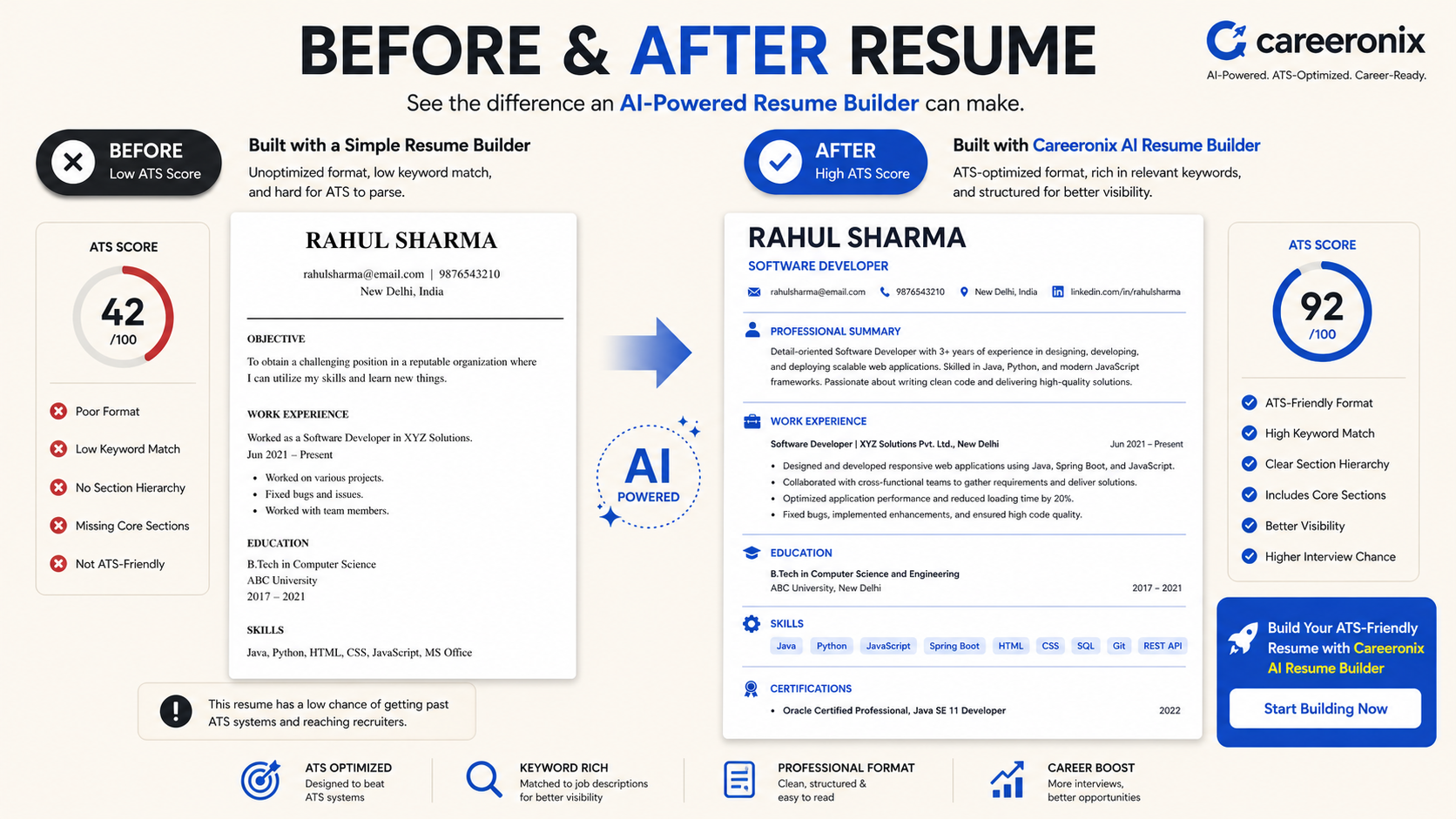
Today, many companies use ATS (Applicant Tracking Systems) . If your resume is not ATS-friendly, it may never reach human recruiters.
Create an ATS-Friendly Resume Easily
If you’re a fresher or job seeker and want to create a modern ATS-friendly resume without struggling with formatting, templates, or keywords, try the
Careeronix Resume Builder
It helps you build clean, professional resumes designed for today’s hiring systems.
(Click Here To Create Your ATS Friendly Resume From Scratch)
FAQs
What is the difference between Resume, CV, and Biodata?
A resume is short and job-focused, a CV is detailed and academic-focused, while biodata mainly contains personal information used for formal or government purposes.
Which is better for freshers: Resume or CV?
For most private jobs and internships, freshers should use a resume because recruiters prefer short and skill-focused applications.
Is biodata still used in India?
Yes, biodata is still used in India for government jobs, traditional organizations, and marriage profiles, though private companies mostly ask for resumes today.
Pingback: ATS Resume Keywords for Freshers: Optimize vs Stuff | Careeronix